



Gautam Gupta – Published in partnership with the Vietnam Independent Directors Association (VNIDA) 2026
The Scale of Destruction
Between 2021 and 2024, three corporate fraud cases in Vietnam destroyed a combined VND 690 trillion in value. That figure is not a typo.
At Saigon Commercial Bank, the controlling shareholder held 91.5 per cent of the bank through 27 nominee shareholders, built an ecosystem of roughly 1,000 shell entities, and funnelled 93 per cent of the bank’s entire loan book to companies she controlled. The financial damage attributed by the court reached VND 677 trillion. She received a death sentence in April 2024. Two former SCB chairmen and the CEO received life sentences.
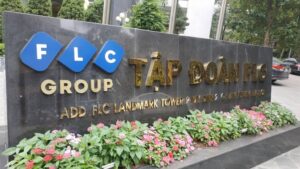
At FLC Group, the chairman fabricated the capital base of subsidiary FLC Faros, inflating it from VND 1.5 billion to VND 4,300 billion using 20 shell companies and 450 securities accounts held by 26 relatives. He misappropriated VND 3.6 trillion from more than 30,000 investors.
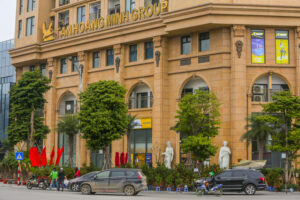
At Tan Hoang Minh, the parent company was already over-leveraged at VND 18.5 trillion in debt, so it used three subsidiaries as conduits to issue VND 10.03 trillion in bonds to 6,630 retail investors. The subsidiaries’ financials were fabricated. VND 5 trillion of new investor money was used to pay earlier bondholders. VND 8.6 trillion was misappropriated.
Three cases. Three controlling shareholders. Three boards that either participated in the fraud or failed to see it happening in front of them.
The common thread is not complex financial engineering. It is related party transactions.
Every one of these scandals was built on transactions between entities controlled by the same person or family, structured to look like arm’s length deals and approved by boards that either could not or would not ask the right questions. Vietnam’s legal framework for RPT oversight is reasonable on paper. It did not matter. The rules existed. The board-level mechanisms to enforce them did not.
This article examines how RPTs were weaponised in Vietnam’s three largest corporate fraud cases, identifies the specific governance failures that allowed it, and proposes a practical oversight framework for independent directors.
The Legal Framework: Reasonable on Paper
Vietnam’s RPT regulatory framework is not as weak as the scandals might suggest. On paper, the rules cover the essential bases.
The Enterprise Law 2020 (Law 59/2020/QH14), at Article 167, requires that any transaction between a company and its related parties exceeding 10 per cent of total assets must be approved by the board of directors. Transactions exceeding 35 per cent of total assets require approval by the General Meeting of Shareholders. Related parties who have an interest in the transaction are prohibited from voting.
Decree 155/2020/ND-CP, at Article 293, goes further for listed companies. It categorically prohibits companies from providing loans, guarantees, or other financial support to controlling shareholders, board members, and their related persons, except under narrowly defined conditions.
Circular 96/2020, Appendix V, mandates annual disclosure of all RPTs in the company’s annual report, including the nature, value, and terms of each transaction and the identity of the related party.
The Securities Law 2019 defines “insider” and “affiliated person” broadly enough to capture most of the relationships that matter: family members, controlling entities, and persons with the ability to influence corporate decisions.
Read together, these provisions create a framework broadly aligned with OECD expectations. The disclosure requirements exist. The approval thresholds exist. The conflict-of-interest restrictions exist.
None of it stopped what happened at SCB, FLC, or Tan Hoang Minh.
The framework assumes three things that turned out to be false in each case: that the company knows who its related parties actually are, that independent directors have the authority and information to challenge transactions, and that RPT disclosure is treated as risk management rather than a compliance footnote. When all three assumptions fail simultaneously, the legal framework becomes decoration.
Three Scandals, One Pattern

Van Thinh Phat and SCB: The Ownership Problem
The most basic requirement of RPT oversight is knowing who the related parties are. At Saigon Commercial Bank, this was impossible by design.
The controlling shareholder of SCB held 91.5 per cent of the bank’s shares, but not in her own name. She distributed her shareholding across 27 nominee holders, individuals who held shares on her behalf with no public disclosure of the beneficial ownership arrangement. Under the Enterprise Law, a “related party” includes persons or entities controlled by the same individual. But if the controlling individual’s ownership is hidden behind nominees, the related party register is incomplete from the start.
The scale of what followed is difficult to overstate. She built an ecosystem of approximately 1,000 entities. These entities borrowed from SCB. Total lending to companies she controlled reached VND 1,066 trillion, representing 93 per cent of SCB’s entire loan book. Not one of these loans was flagged as a related party transaction, because none of the borrowing entities appeared to be “related” to the bank’s shareholders on paper.
The board was not an innocent bystander. Two successive chairmen and the CEO were convicted and sentenced to life imprisonment. They approved thousands of illegal loans to entities they knew were controlled by her. A senior State Bank of Vietnam inspector, the head of the central bank’s Banking Inspection and Supervision Agency, was convicted of accepting substantial bribes to overlook irregularities at SCB.
The lesson is structural, not moral. When a controlling shareholder controls both the company and the process of identifying “related parties,” the RPT framework is meaningless. The related party register becomes a fiction maintained by the people it is supposed to constrain.
FLC Group: The Shell Company Problem
The chairman of FLC Group used a different method, but produced the same result: transactions that were related in substance but independent on paper.
He controlled a network of 20 shell companies and held approximately 450 securities accounts through 26 family members. The flagship fraud was the fabrication of FLC Faros’s capital base. Through a series of circular capital contributions routed through shell entities, he inflated FLC Faros’s charter capital from VND 1.5 billion to VND 4,300 billion. The contributed capital did not exist. It was paper, manufactured through transactions between entities all controlled by the same family.
Under the Securities Law, every one of these entities and family members would qualify as an “affiliated person.” The law is clear on this. But affiliated person status only matters if someone identifies the affiliation and acts on it. Nobody did. The transactions were presented as investments from independent parties. FLC’s board did not challenge them. No independent valuation was conducted. No RPT committee reviewed the capital contributions.
Thirty thousand investors bought shares in a company whose capital base was fabricated. VND 3.6 trillion was misappropriated. The chairman was sentenced to 21 years at first instance.
The FLC case shows a different dimension of RPT failure. The problem was not hidden ownership in the traditional sense. The chairman’s control of the shell network was discoverable. The family relationships were knowable. But nobody on the board was looking, because there was no mechanism requiring them to look.
Tan Hoang Minh: The Conduit Problem
The Tan Hoang Minh case was the most straightforward of the three, and perhaps the most instructive for independent directors.
The parent company had accumulated VND 18.5 trillion in debt and could not issue bonds in its own name without triggering regulatory scrutiny. So it used three subsidiaries as issuance vehicles. The subsidiaries issued VND 10.03 trillion in bonds to 6,630 retail investors. Their financial statements were fabricated to make them appear creditworthy. In reality, VND 5 trillion of new investor money was cycled back to pay earlier bondholders. Functionally, a Ponzi scheme.
The subsidiary boards were not independent. They existed to serve the parent’s fundraising needs. Their board members did not challenge the bond issuances, the fabricated financials, or the circular flow of funds. They could not have, even if they wanted to, because their appointments, their information, and their authority all flowed from the controlling shareholder.
The chairman received an 8-year sentence. VND 8.6 trillion was misappropriated.
For independent directors, the Tan Hoang Minh case raises a specific question: when a subsidiary is used as a conduit for its parent’s transactions, what does RPT oversight even mean? Unless the parent’s board subjects these intra-group transactions to genuine independent review, the subsidiaries are pass-throughs with board meetings attached.
Why Independent Directors Are Not Catching This
The three cases above are extreme. Most Vietnamese companies are not running fraud operations through nominee networks and shell companies. But the governance weaknesses that enabled those frauds exist across the market. They are systemic, not exceptional.
Vietnam ranks among the lowest ASEAN economies on board independence metrics in recent ASEAN Corporate Governance Scorecard cycles. VNIDA’s own surveys of public company boards confirm what the numbers suggest: many companies either lack independent directors entirely or appoint only the minimum required by law. In banking, where independent directors are legally required regardless of board size, the average share of independent directors is just 11.8 per cent (VNIDA-FiinGroup surveys).
The practical reality is well understood by anyone who has sat on or advised boards in the region. Independent directors are typically nominated by controlling shareholders. They receive modest fees. They have limited access to information beyond what management chooses to present. Dedicated RPT committees are almost unheard of.
There is a cultural dimension too, and it would be dishonest to ignore it. Challenging a founder or controlling shareholder carries professional cost. A director who asks difficult questions about related party transactions risks being labelled as obstructive, and risks not being reappointed. A director who stays quiet keeps the fee and the title.
I do not say this to excuse passivity. I say it because any practical solution has to account for these realities. Telling independent directors to “be more independent” is not a governance framework. It is a slogan. What they need is structural support: clear mandates, dedicated processes, access to information, and institutional backing that makes it safer to ask hard questions than to stay silent.
A Practical Framework for RPT Oversight
The following five actions are tied directly to the failures identified in the three cases above. They are not generic best practices imported from a different market. They address specific weaknesses in Vietnam’s corporate governance environment as it exists today.
1. Map the Real Ownership Structure
The SCB case demonstrated that a related party register is only as good as the beneficial ownership information behind it. If the register lists nominees without identifying the actual controllers, it is worse than useless.
Independent directors should push for an ownership mapping exercise that goes beyond the share register. This means commissioning an independent review of beneficial ownership across the company’s shareholder base, including nominees, cross-holdings, and offshore entities. The output should be a living related party register, updated at least quarterly, that reflects actual control relationships rather than nominal shareholdings.
Is this easy? No. In Vietnam’s conglomerate environment, ownership structures can be deliberately opaque. But the difficulty does not reduce the obligation. If the board does not know who its real related parties are, every subsequent RPT decision is being made blind.
2. Require Independent Review Before RPT Approval
At FLC, capital contributions from shell entities were approved without independent valuation or challenge. The transactions sailed through because no process existed to stop them.
Boards should establish an RPT committee with majority independent membership. The committee’s mandate should include reviewing all material RPTs before they reach the full board for approval. For transactions above a defined threshold, the committee should have authority to commission independent valuations and engage external advisors at the company’s expense.
The key word is “before.” Most RPT oversight in Vietnam happens after the fact, through annual disclosure in Appendix V of the annual report. By that point, the transaction has already been executed. Post-hoc disclosure is transparency. It is not oversight.
3. Build Working Conflict-of-Interest Protocols
All three cases involved board members with direct conflicts of interest in the transactions they were approving. In theory, conflicted directors are prohibited from voting under the Enterprise Law. In practice, the protocols are weak.
A working conflict-of-interest protocol means more than a policy document in a filing cabinet. It means real-time declaration at the start of every board meeting, at the agenda level. Conflicted directors leave the room for the discussion, not just abstain from the vote. The minutes record who declared, who left, and what the remaining directors decided. Basic governance mechanics. Missing in most Vietnamese boardrooms.
4. Embed RPT Screening in Business Processes
The Tan Hoang Minh case showed how subsidiaries can be used as conduits for the parent’s transactions, bypassing oversight at the group level. The bonds were issued by subsidiaries. The money flowed to the parent. The subsidiary boards were not positioned to challenge this.
RPT screening should not depend on board meetings alone. It needs to be embedded in the company’s operational processes: procurement, treasury, M&A, and lending for financial institutions. This means integrating counterparty checks into workflow systems, linking counterparty databases with ownership records, and flagging transactions that involve entities connected to shareholders, directors, or senior management.
For conglomerates with large subsidiary networks, this requires investment. It is not cheap. But the alternative is subsidiaries operating as unmonitored pass-throughs for the controlling shareholder’s capital needs.
5. Report RPTs as Risk, Not Compliance
The current reporting standard is Circular 96, Appendix V. It requires listed companies to disclose RPTs in their annual report. Most companies do this. Some do it well. But the disclosure is treated as a compliance obligation, not as a signal to investors about how the board manages this specific category of risk.
Companies preparing for the FTSE Emerging Market upgrade should go well beyond the Appendix V minimum. This means including a narrative section describing the board’s RPT oversight framework: how related parties are identified, how transactions are reviewed, what thresholds trigger independent review, and whether any material RPTs were rejected or modified during the year. Foreign institutional investors screen for exactly this kind of disclosure. Its absence is a red flag.
What Comes Next
Vietnam’s FTSE Emerging Market reclassification, expected to take effect in September 2026, will bring a new class of institutional capital into the market. That capital comes with expectations. RPT governance is one of the first things institutional investors examine when evaluating a new market, because it is a direct proxy for whether minority shareholders are protected from value extraction by insiders.
The legal framework is not the problem. Vietnam’s Enterprise Law, Securities Law, and disclosure regulations provide a reasonable foundation. What is missing is the boardroom culture and practical mechanisms that turn those rules into functioning oversight.
The evidence from SCB, FLC, and Tan Hoang Minh is clear enough. In each case, the controlling shareholder structured transactions to move money through entities they controlled, using the corporate form to disguise self-dealing. In each case, the board either participated or failed to identify what was happening. In each case, the existing legal framework was technically adequate to prevent the fraud. In each case, it did not matter.
Independent directors who take RPT oversight seriously protect minority shareholders, protect the integrity of the capital markets, and protect themselves. The SCB and FLC cases resulted in criminal convictions for board members. Personal liability is not theoretical in Vietnam. It is recent history.
The next scandal is preventable. But only if boards start doing this work now.
Gautam Gupta is a risk management and governance professional with experience across banking, insurance, and financial services in Asia. He is a member of the Vietnam Independent Directors Association (VNIDA). This article was developed in partnership with VNIDA as part of its thought leadership programme on corporate governance in Vietnam.